Category Archives: Bedroom

How to Light Your Bedroom and Create Visual Interest

Benefits of Tunable White Light

Because the possibilities are endless, bedrooms can be problematic to light. The bedroom is one room in which you can do just about anything to light up the space, whether you want to light from up above with overhead lighting, the side with wall scones or from the surface with table lamps. Our suggestion? Light from all over to give your room as much depth, detail and light as possible. Options are key, and the more lighting your space has, the more options you will have down the road.

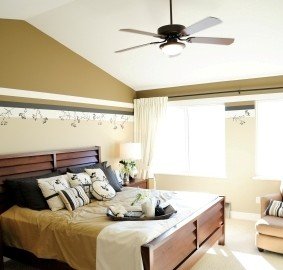
Where to start: Overhead lighting. Overhead lighting is usually the most complicated to install and the most dramatic, so start there and work your way out. Of course, there are many overhead lighting options, ranging from recessed lighting to ceiling fans and chandeliers. This choice all depends on your specific wants and needs, though in Arizona ceiling fans tend to be the obvious choice.

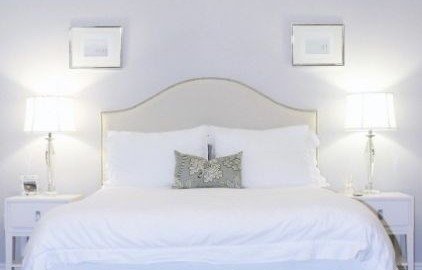
Once you have your overhead lighting taken care of, work your way to the bed. Balance and symmetry are the most appealing to the human eye, so think of adding a pair of matching table lamps or sconces to either side of the bed. This will draw the eye to the focal point of any bedroom, the bed, and then bring the eye out towards the lamps or sconces.

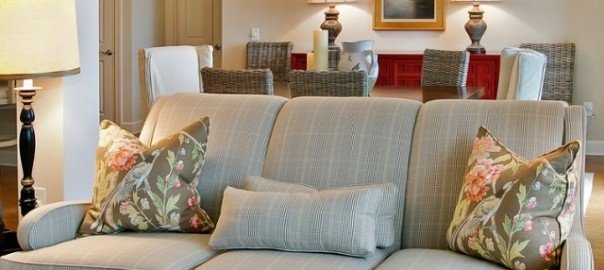
If there are any spaces left in your bedroom that are not properly lit, light them. A lot of people have a chair in their bedrooms used for reading or watching TV. A floor lamp is a perfect choice for these smaller spaces; not only will it add light, it will also add depth to the room by creating even more interest with lines and heights.

If you followed these tips, your bedroom now has overhead lighting from up above, lighting at eye level on either side of the bed, and a tall floor lamp with long lines which will bring the eye up and down again. By lighting your bedroom from varying heights rather than a stagnant height throughout, you will create visual interest and depth in your space.


Bedroom Lighting 101

Bedroom Lighting 101

A bedroom is not only a place to sleep; it can be a refuge from the bustle of the rest of the house. There is also the need to see into dark corners like in dresser drawers and closets, where you can never seem to have “too much light”. Don’t forget to use layers when lighting your bedroom. We recommend overhead lighting – a ceiling fan or chandelier – as well as table or floor lamps. A new and common trend for bedrooms has been to replace table lamps with wall sconces, freeing up more surface space and bring the eye up to create more visual interest.

What size should my bedside table lamps be?

The size of the lamps should be a comparable scale to the size of the headboard and end tables being used. For instance, small lamps will be “lost” next to a large, dominant headboard, just as extra large table lamps can dominate a space next to a less dramatic and (visually) smaller headboard. Interior design is all about balance: balancing sizes, colors, shapes and heights. The more balance you can create in a space, the more appealing it will be to the eye.

What other ways can I have bedside lighting?

Swing arm wall lights add a decorative element and allow one person to read without disturbing the other. To avoid glare, install them so the shades are about 22 inches away from the mattress. Pendants, track and recessed lighting are other ways to add reading light and a touch of high style to your room.

Living Room or Guest Room Lighting 101

Living rooms and guest rooms are responsible for so many varied activities that the lighting plan should be flexible. Think of all the activities that you will do in the room and then add various levels of light throughout the space to properly accommodate as many as possible.

If there is a game table or pool table, supply over head light on a separate dimmer switch to ensure you have complete control over the room’s lighting, no matter what activities are taking place. Be sure that bar areas, bookcases, DVD/video collections or architectural features like fireplaces are not overlooked. Instead of trying to hide these areas, think about making them a feature by adding light and making the area more visually interesting.

Track or recessed lights, ceiling fans, wall sconces and floor and table lamps can all be utilized in this multi-purpose room as well. Over head lighting helps light up large areas, while floor and table lamps work to light up smaller, more specific areas. A combination of each tends to result in the best balance possible.

A good rule to follow when it comes to lighting larger rooms that are used for multiple activities is to light the space from a variety of different heights. Instead of using one type of lighting fixture throughout the entire space, trying using over head lighting, wall (sconce) lighting, table lamps and/or floor lamps. This will help easily transform your space from a living room to that rare yet necessary party or game room you may need it to be.

What type of lighting is right for a living room?

There is no right or wrong answer; living rooms have a wide range of uses, and those specific uses are what will determine what lighting fixture(s) is right for the space.